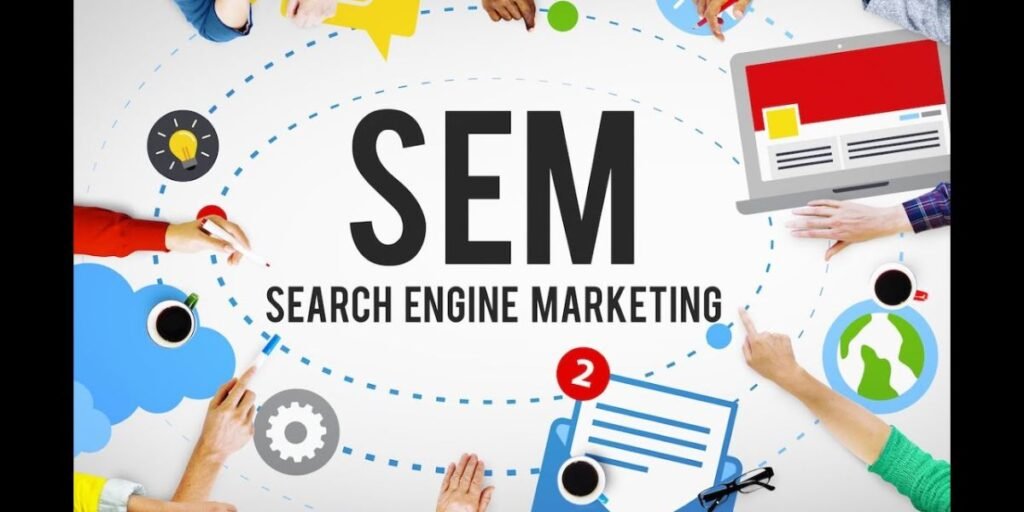
Search engine marketing has evolved far beyond running a few Google Ads campaigns and hoping for clicks. In the current digital economy, SEM acts as the primary engine for capturing high buying intent at the exact millisecond a customer is ready to pull the trigger. While other marketing channels often interrupt a user flow, search marketing meets them where they already are.
Most marketing channels today rely on disruption. You are scrolling through a social feed or watching a video, and an ad appears. SEM is fundamentally different. It reaches users when they are actively searching for a specific solution, comparing potential providers, or finalizing a purchase decision. This intentionality is why SEM remains a top-tier acquisition channel even as AI-driven content and social algorithms shift.
Real businesses do not dump thousands of dollars into search campaigns for the sake of vanity metrics like impressions. They invest because they need a predictable pipeline of revenue. Whether it is booked appointments, ecommerce sales, or enterprise software demos, the goal is always a measurable return on ad spend.
The modern SEM landscape sits at a complex intersection. It is no longer just about bidding on a word. It requires a deep understanding of:
- AI-driven automated bidding systems that adjust in real time.
- Behavioral analytics and conversion rate optimization.
- First-party data integration for precise audience targeting.
- High-velocity landing page engineering to reduce friction.
What Search Engine Marketing Actually Means Today
In its simplest form, SEM is the process of increasing a brand visibility in search engines through paid advertising strategies. While it was once synonymous only with basic text-based ads, the ecosystem in 2026 is vastly more expansive and technical.
Successful SEM today is about purchasing visibility with surgical precision. It involves a mix of different ad formats and technical layers:
- Paid search text campaigns that answer direct queries.
- Google Shopping and visual product ads for retail.
- Local Service Ads with built-in trust signals and verified badges.
- Remarketing sequences that follow high-intent visitors across the web.
- Branded search protection to prevent competitors from stealing your traffic.
The biggest misunderstanding is treating SEM as a click-generating machine. It is actually a demand-fulfillment system. If someone is casually browsing, they might not need a product today. But if they search for an emergency plumber or a specialized legal firm, their intent is immediate. SEM allows a business to be the first answer to that urgent problem.
Why Businesses Use SEM Instead of Waiting for SEO
SEO is a critical long-term asset, but it is often slow. A new brand or a company launching a new service might wait months before organic rankings produce enough traffic to sustain the business. SEM provides the immediate oxygen required for growth and rapid scaling.
Many local service providers cannot afford to wait for an organic ranking to climb. They need leads today to keep their teams working:
- Emergency Services: HVAC, roofing, and plumbing companies depend on being visible the moment a disaster strikes.
- Legal Firms: Personal injury and DUI attorneys use SEM because their clients need help right now, not after reading a long blog post.
- Healthcare: Dental clinics and urgent care centers use local targeting to fill appointment slots daily.
Ecommerce brands use SEM to gain an edge during specific windows. When a new product launches or a seasonal sale begins, they cannot wait for crawlers to update organic positions. They use Shopping Ads to place products directly in the eye line of shoppers who are already in a buying mood.
SaaS and B2B companies use it for high-value acquisition. A search for the best project management software might have a high cost per click, but for a software firm, a single enterprise lead can be worth tens of thousands of dollars. They pay for the position because the math supports the investment.
What Most Businesses Realize Too Late About SEM
One of the most dangerous myths in digital marketing is that more traffic equals more money. This is rarely true in a vacuum. A campaign can have a high click-through rate and massive impressions while still being a financial failure.
The breakdown almost always happens after the user clicks the ad. A business might win the auction but lose the customer due to structural issues:
- Friction-heavy landing pages that take too long to load or confuse the user.
- Irrelevant ad copy that does not match the actual page content.
- A lack of clear trust signals such as verified reviews or professional certifications.
- Broken conversion tracking that prevents the AI from learning who the real buyers are.
Experienced marketers focus on conversion economics rather than traffic volume. It is significantly more profitable to have fifty high-intent visitors who convert at 10 percent than to have five hundred low-intent visitors who convert at 0.5 percent. The cost of those extra 450 clicks is essentially wasted capital that could have been used elsewhere.
Search Intent Is More Important Than Search Volume
Understanding the difference between an informational search and a transactional search is the difference between profit and loss. High search volume is often a trap for inexperienced advertisers who chase numbers instead of revenue.
A keyword like what is CRM software might get fifty thousand searches a month, but most of those users are just researching or doing homework. Conversely, best CRM for small law firms might only get five hundred searches, but those people are looking to buy a solution right now.
High-performing campaigns are built on:
- Transactional queries: Searches that include words like buy, hire, or price.
- Comparison intent: Users looking for a specific brand versus another.
- Local intent: Searches that indicate a need for a service in a specific geographic radius.
Why Google Ads Alone Is Not a Complete SEM Strategy
Many businesses incorrectly assume that launching a Google Ads account is the end of the journey. In 2026, the ad platform is just the entry point. A complete SEM strategy requires a holistic ecosystem that handles the user journey from the first search to the final conversion.
To drive real revenue, you must integrate:
- Advanced Remarketing: Re-engaging users who visited but did not buy.
- Dynamic Landing Pages: Pages that change headlines based on the exact keyword the user typed.
- CRM Integration: Feeding sales data back into the ad platform so the AI knows which leads turned into actual profit.
- Competitor Intelligence: Monitoring how rivals are bidding to adjust your own strategy dynamically.
The business that treats SEM as a simple toggle switch usually fails. The business that treats it as a continuous loop of data and optimization is the one that captures the market.
The Businesses Getting the Strongest Results From SEM
Success in search marketing is not evenly distributed across all sectors. Certain industries naturally thrive because the distance between a search query and a financial transaction is extremely short. In these markets, being invisible on the search results page is equivalent to being out of business.
Legal Services
Law firms, particularly those specializing in personal injury, immigration, or criminal defense, are among the heaviest spenders in search marketing. Because a potential client often searches for help during a high-stakes life event, the intent is absolute. While the cost per click for terms like truck accident lawyer can reach hundreds of dollars, the lifetime value of a single case justifies the aggressive bidding.
Healthcare Clinics
Dental practices, urgent care centers, and specialized clinics use SEM to fill their daily schedules. By targeting local intent and emergency queries, they capture patients at the exact moment they need a physical appointment. This immediacy allows healthcare providers to bypass traditional branding and go straight to the appointment booking.
Home Services
Electricians, HVAC technicians, and roofing contractors operate in an urgency-driven market. When a furnace fails in winter, the homeowner is not browsing social media for inspiration. They are performing a high-intent search for a service provider who can arrive today. SEM allows these companies to appear at the very top of the mobile search results, where most emergency calls originate.
Ecommerce Brands
Retailers use SEM to place specific products in front of shoppers who have already expressed a desire to buy. Google Shopping ads are particularly effective here because they show the price, image, and reviews before the user even clicks. This pre-qualifies the buyer, ensuring that the traffic arriving at the site is already deep into the consideration phase.
SaaS and B2B Companies
Software companies use SEM to dominate the research phase of the B2B buying cycle. By bidding on comparison keywords and solution-based phrases, they insert their brand into the conversation early. For a SaaS firm, a single lead from a well-timed search ad can turn into a multi-year enterprise contract.
The Biggest Budget Mistakes Businesses Make
Even with a high-demand product, it is remarkably easy to bleed money in a search campaign if the operational fundamentals are ignored. Many businesses treat their ad spend like a slot machine rather than a calculated investment.
Common mistakes that drain budgets include:
- Targeting too broadly: Running ads across the entire country when the business can only service a specific city.
- Sending traffic to the homepage: A homepage is a general introduction, not a conversion tool. Dedicated landing pages that mirror the ad copy consistently perform better.
- Ignoring negative keywords: Failing to tell the system which words to avoid. For example, a luxury watch dealer should exclude the word cheap to prevent paying for low-value clicks.
- Optimizing for clicks instead of profit: High traffic numbers look good in a report, but they mean nothing if they do not result in a positive Return on Ad Spend (ROAS).
- Running campaigns without tracking: If you do not know which keyword led to a phone call or a sale, you are essentially gambling with your marketing budget.
AI Is Quietly Reshaping Search Engine Marketing
In 2026, the human role in SEM has shifted from manual bidding to strategic orchestration. Artificial intelligence now handles the heavy lifting of adjusting bids in real time based on thousands of signals, including the user location, time of day, and past search behavior.
Systems like Performance Max and Smart Bidding use machine learning to predict which users are most likely to convert. This shift has made the platform more accessible, but it has also increased the importance of first-party data. The AI is only as good as the information you feed it. If you feed the system data on your best customers, the AI becomes a powerful tool for finding more people just like them.
At the same time, the rise of AI-generated search experiences means that informational traffic is becoming harder to capture. This forces businesses to double down on commercial and branded demand. The goal is no longer just to be a source of information, but to be the definitive destination for a transaction.
Why Landing Pages Matter More Than Most Ads
Many advertisers spend weeks obsessing over ad headlines while spending only hours on the page where the user actually lands. This is a fatal strategic error. A great ad can get someone to the door, but the landing page is what closes the sale.
A high-converting landing page must:
- Answer the intent immediately: The headline on the page should match the keyword the user searched for.
- Reduce friction: The path to a purchase or a form submission should be obvious and take as few clicks as possible.
- Build trust quickly: Reviews, badges, and professional certifications must be visible above the fold.
- Load instantly: Even a one-second delay in page load time can cause a significant drop in conversion rates, especially on mobile devices.
In many competitive markets, the business with the better landing page can afford to pay more for clicks because they convert a higher percentage of their traffic. This makes the landing page a competitive weapon rather than just a technical requirement.
Local Search Advertising Is Becoming Extremely Competitive
For local businesses, the search results page is now the digital storefront. Searches containing near me or open now continue to grow, particularly on mobile. This has led to an intensification of competition for the top spots in local search results.
Local SEM strategy now requires managing multiple layers of visibility:
- Google Maps ads that appear when people are looking for directions.
- Local Service Ads (LSAs) that allow users to call or message the business directly from the search result.
- Mobile call campaigns designed specifically to trigger phone calls rather than website visits.
Success in local SEM is increasingly tied to reputation management. Because reviews are often displayed directly alongside the ads, a business with a 4.8-star rating will consistently outperform a competitor with a 3.5-star rating, even if the latter spends more on their bidding strategy.
What Many Agencies Never Tell Clients
Some agencies optimize campaigns for vanity metrics instead of real profitability. A campaign can appear successful on paper because impressions increased, the click-through rate improved, or traffic doubled, while the business itself is actually losing money. This happens when the focus is on platform-level data rather than business-level outcomes.
Another overlooked reality is that automated bidding systems require clean, high-quality conversion data to function. If your tracking is inaccurate or if you are counting “thank you” page views that didn’t result from a sale, the algorithm will optimize toward the wrong users entirely.
Many businesses also underestimate the sheer cost of entry in competitive markets. In industries like insurance or finance, the cost of a single click can be staggering, making it impossible to survive without a disciplined strategy for conversion optimization and long-term customer retention.
The companies succeeding over the long haul are those that stop viewing SEM as an isolated silo. They treat it as one part of an integrated acquisition strategy that includes SEO, email follow-ups, and retargeting to maximize the value of every visitor.
SEO and SEM Work Better Together
Many businesses incorrectly treat SEO and SEM as competing strategies, often asking which one they should choose. The strongest digital brands understand that these two disciplines are synergistic. Using them in tandem creates a market dominance that neither can achieve alone.
SEM provides the immediate visibility and rapid data collection that SEO cannot. By running paid ads, you can quickly discover which keywords actually drive revenue and which headlines resonate with your audience. This data then serves as a roadmap for your SEO content strategy, allowing you to invest your long-term organic efforts into topics that are already proven to convert.
Furthermore, appearing in both the paid and organic sections of the search results increases your brand’s perceived authority. When a user sees your company at the top of the ads and at the top of the organic listings, it creates a “halo effect” of trust. This dual presence significantly increases the likelihood of a click compared to appearing in only one spot.
What Realistic SEM Success Actually Looks Like
Many beginners expect instant, effortless profitability the moment they turn on a campaign. In reality, SEM growth is an iterative process. A successful campaign is rarely “set and forget.” It requires a cycle of constant testing, refinement, and adjustment based on how the market responds to your offers.
Strong campaigns usually move through several distinct phases:
- The Testing Phase: Gathering initial data on keyword performance and audience behavior.
- The Refinement Phase: Cutting out non-performing keywords and tightening geographic or demographic targeting.
- The Optimization Phase: Improving landing page conversion rates and refining ad copy to lower the cost per acquisition.
- The Scaling Phase: Gradually increasing budget once a predictable and profitable return has been established.
The goal is not just to “get traffic,” but to build a predictable customer acquisition system that remains profitable even as you scale. This requires patience, detailed analytics, and the operational discipline to make decisions based on data rather than gut feeling.
Final Thoughts
Search Engine Marketing (SEM) has become one of the most powerful revenue-generating systems in modern business because it captures human intent at the exact moment a solution is needed.
The companies generating the strongest results in 2026 are not simply running ads. They are building complete systems that align search visibility with conversion optimization, high-quality data, and a deep understanding of user behavior.
SEM works best when it is treated as revenue infrastructure rather than just a marketing expense. In an increasingly crowded digital landscape, the businesses that master the art of connecting with high-intent users will continue to gain a massive advantage over brands still relying on outdated, disruptive marketing tactics.
Frequently Asked Questions
What is search engine marketing?
SEM is a digital strategy used to increase a brand’s visibility in search engine results pages through paid advertising. It focuses on reaching users who are actively searching for products or services.
Is SEM the same as SEO?
No. SEO focuses on earning organic rankings over time through content and technical authority. SEM involves paying for immediate visibility through platforms like Google Ads.
Why do some SEM campaigns fail?
Most failures are caused by poor keyword targeting, slow or confusing landing pages, or a lack of proper conversion tracking. Without knowing what drives a sale, it is impossible to optimize the budget.
Can a small business compete with big brands in SEM?
Absolutely. Small businesses can win by using hyper-local targeting and focusing on niche, long-tail keywords that larger competitors might overlook.
How is AI changing SEM in 2026?
AI is automating the technical side of bidding and targeting, allowing marketers to focus more on high-level strategy, creative messaging, and the overall customer experience.