
Affiliate Marketing
Affiliate marketing allows you to act as a third party to advertise products and earn a commission. It is a revenue-sharing model where you, the publisher, promote a merchant’s goods or services in exchange for a piece of the profit from the sales or traffic you generate.
What Is Affiliate Marketing?
At its core, affiliate marketing is a performance-based opportunity. You find a product you like, promote it to others, and earn a small profit for each sale that you make. It functions as a modern digital version of a referral program. Instead of a salesperson standing in a physical store, you are a digital partner using your content to connect people with solutions.
For example, imagine a tech blogger who writes a detailed guide on the best laptops for college students. Within that guide, they include links to specific models on a site like Amazon. When a student clicks one of those links and buys a laptop, the blogger earns a commission. The student pays the same price they would have anyway, but the blogger gets rewarded for providing the helpful recommendation.
Businesses love this model because it is low-risk. They only pay the affiliate when a specific result (like a sale or a lead) is achieved. This allows companies to expand their reach and boost brand awareness without spending thousands on traditional advertising that might not even work.
How Affiliate Marketing Works (Step-by-Step System)
The mechanics of an affiliate campaign rely on a coordinated effort between several different parties. While it might look like a simple link on a page, there is a sophisticated system of tracking and relationship management happening behind the scenes.
Ready to see how the pieces fit together? Explore the roles and the process below.
The 4 Key Players in Affiliate Marketing
Affiliate marketing typically involves a relationship between four main actors. Each plays a unique part in ensuring the cycle remains profitable:
- The Affiliate (or “Publisher”): This is you. You are the individual or entity that promotes the merchant’s product to your audience.
- The Merchant: This is the individual or entity selling the product. They could be a massive retailer or a solo creator with a digital course.
- The Affiliate Network: This serves as an intermediary. While you can connect with merchants directly, networks like ShareASale or ClickBank are common channels for finding programs and managing payouts.
- The Customer: This is the person who actually makes the purchase. Merchants partner with you to reach your audience and convert them into long-term subscribers or buyers.
The Affiliate Marketing Process Explained
The actual flow of a successful campaign is a logical sequence. It starts when you create high-quality content (like a blog post, video, or email), and embed your unique affiliate link. When a visitor consumes your content and clicks that link, a small file called a cookie is placed on their device.
This cookie is vital because it tracks the sale back to you, even if the customer leaves and returns to buy the product a few days later. Once the purchase is confirmed, the merchant verifies the transaction and pays you a commission through your chosen network. It is a seamless cycle that turns your influence into a measurable business result.
Types of Affiliate Marketing
Experts often categorize affiliate marketing into three distinct styles. These categories depend on your level of connection with the product and the audience you serve.
Unattached Affiliate Marketing
In this model, you have no direct connection to the product or niche. You are not claiming to be an expert; you are simply running paid advertising campaigns to get people to click a link. For instance, you might run a Facebook ad for a weight loss supplement you have never used.
This approach is highly scalable because you do not need to spend time building an audience or writing long blog posts. However, the lack of trust makes it difficult to maintain long-term success. It is best suited for advanced marketers who excel at technical advertising and data analysis.
Related Affiliate Marketing
This is where you promote products related to your niche, but you do not necessarily use them yourself. You have an established audience, and the products make sense for that community. For example, a fitness influencer might promote a specific brand of yoga mats they have researched online but have not personally tested on a gym floor.
The main advantage here is that you maintain your topical authority without needing to buy and test every single product. The downside is that you risk your hard-earned reputation if the product turns out to be of poor quality. It is a great middle-ground for content creators who want to offer a wide range of recommendations to their readers.
Involved Affiliate Marketing
This is the gold standard for modern creators. You only promote products you truly use and believe in. You are an active participant in the niche and can personally vouch for the value. A great example is a professional photographer recommending the exact camera lens they used for their last gallery shoot.
Because the trust factor is incredibly high, you will see much better conversion rates from your audience. The only real disadvantage is the time it takes to build this deep level of connection. If you want to build a sustainable, long-term business, this is the approach to follow.
How Affiliate Marketers Make Money
Unlike a traditional sales role with a base salary, your income is tied to specific performance results. Depending on the program you join, you might earn money in several different ways.
Pay-Per-Sale (PPS)
In this model, the merchant pays you a percentage of the sale price after the customer completes a purchase. It is the most common structure for physical goods and high-ticket digital items.
Pay-Per-Lead (PPL)
You earn a commission every time a user you directed completes a specific action, such as filling out a contact form, signing up for a trial, or subscribing to a newsletter.
Pay-Per-Click (PPC)
With pay-per-click, you earn a commission every time a user clicks a link that routes them to your partner’s website. You are being paid for the traffic itself, regardless of whether a sale happens.
Pay-Per-Install (PPI)
Common in the software and mobile app industry, you get paid every time a user installs an app or a program through your unique link.
Which model is best?
For most beginners, Pay-Per-Sale and Pay-Per-Lead offer the best suitability. While PPC sounds easier, the payouts are often very small and require massive traffic to be profitable. Advanced marketers often use a mix of these models to diversify their revenue streams and maximize their earnings.
Affiliate Marketing Channels (Where You Promote Products)
Choosing where to share your affiliate links is just as important as the products you choose to promote. Your channel is the digital space where you build your community and establish your authority. Some marketers prefer the long-term stability of a website, while others thrive on the fast-paced energy of social media.
Blogging (SEO-Based Affiliate Marketing)
Blogging remains one of the most reliable ways to build a sustainable affiliate business. By creating high-quality, search-optimized articles, you can attract visitors who are actively looking for information. The primary advantage here is the passive nature of the traffic. An article you write today can still generate commissions years from now. However, it does require a significant time investment to start ranking in search results and mastering the technical side of web hosting.
YouTube and Video Content
Video is an incredibly powerful medium for building trust. It allows your audience to see a product in action and hear your honest thoughts. Whether you are doing a deep-dive review or a simple unboxing, video content often has much higher engagement rates than written text. While it does require some technical skill in filming and editing, the personal connection you build with viewers is hard to beat. People buy from people they feel they know.
Social Media Platforms
Instagram, TikTok, and Facebook are perfect for quick, high-impact storytelling. These platforms allow you to show how a product fits into your daily routine in a very natural way. It is a fantastic starting point for those who already have a following, though you are at the mercy of algorithm changes that can affect your reach without warning. Unlike a blog, social media content often has a short shelf life, meaning you have to post consistently to stay relevant.
Email Marketing
Many top-tier marketers believe that the real money is in the list. By building an email database, you own the channel and can reach your audience directly without worrying about search engine rankings or social media trends. It allows for highly targeted recommendations sent straight to an inbox. To succeed here, you must first provide enough value elsewhere, like a free guide or a helpful newsletter, to convince people to subscribe.
Niche Websites and Review Platforms
These are sites dedicated entirely to comparing specific categories of products, such as best outdoor gear or top kitchen appliances. Because visitors to these sites are usually very close to making a purchase, the conversion rates are typically much higher than on general interest blogs. The challenge is that these niches can be highly competitive, requiring a very sharp focus and high-quality photography or data to stand out.
If you are just starting out, blogging or YouTube are generally the best channels for beginners. They allow you to provide the most depth and build the strongest foundation of trust. While social media offers faster growth, a blog or a channel acts as a long-term asset that grows in value over time.
How to Start Affiliate Marketing (Step-by-Step Guide)
Starting your journey as an affiliate marketer can feel overwhelming, but it becomes much simpler when you break it down into a logical sequence. Ready to begin your journey? Follow the steps below to streamline the process.
Step 1: Choose a Profitable Niche
Affiliate marketers are valuable to merchants because they can reach specific audiences composed of potential customers. Ideally, the niche you build your efforts around should relate to your interests and those of a sizable, underserved audience.
As you brainstorm ideas, conduct research with Google Trends to discover what people are searching for. In this exploratory phase, ask yourself the following questions:
- What is a topic or hobby that I am genuinely interested in that is not currently being served?
- What physical or digital products do I use that I would enjoy promoting to others?
- How can I add a new angle or perspective to a topic with a lot of competition?
Step 2: Understand Your Target Audience
Once you have a niche, you need to understand the people within it. You are not just writing for the internet; you are writing for a person with a specific problem. If you are in the home office niche, your audience might be remote workers struggling with back pain. Understanding their daily frustrations and what they value in a solution allows you to recommend products that serve as genuine answers to their problems.
Step 3: Select the Right Platform
Decide on a marketing channel that matches your strengths. If you enjoy writing and organizing data, a blog is a natural fit. If you prefer speaking and being on camera, YouTube or TikTok might be better. In fact, many successful marketers eventually use an omnichannel approach, using a blog for deep information and social media for quick engagement.
Step 4: Join Affiliate Programs
Affiliate networks connect publishers and merchants. While you can sometimes work directly with a brand, joining a network often makes it easier to manage multiple links and track your payouts in one place. Research programs that fit your audience’s budget and needs.
Some popular examples of networks and programs include:
- Amazon Associates
- ShareASale
- ClickBank
- Impact
- Rakuten Advertising
Step 5: Create High-Quality Content
This is the bridge that carries the reader from their problem to the merchant’s solution. Your content should be helpful, honest, and easy to consume. Whether it is a long-form article or a short video, the goal is to provide a mental shift for the reader. If your reviews feel like a forced sales pitch, readers will quickly search for the exit.
Step 6: Drive Traffic to Your Content
Creating content is only half the battle; you need eyes on your work. To increase your overall audience size, it is helpful to use a mix of digital marketing approaches, such as:
- Search Engine Optimization (SEO)
- Social Media Marketing
- Email lists
- Content marketing
For instance, you might find that a combination of timely email blasts and SEO content will improve your marketing efforts more than either one on its own.
Step 7: Track Performance and Optimize
Your affiliate dashboard is your most important tool for growth. It provides the data you need to see which topics are resonating and which products are actually selling. By analyzing these metrics, you can pivot your strategy, focusing more on the high-performing content and refining the areas that are not converting.
Affiliate Content Strategy (The Professional Edge)
The difference between a hobbyist and a professional affiliate is their content strategy. To truly beat the competition, you need to move beyond general information and create content designed to guide a reader toward a confident buying decision.
Types of Affiliate Content That Convert
Different stages of the buyer’s journey require different types of information. To provide the most value, consider creating a mix of the following:
- Product Reviews: These offer a deep dive into a single item, exploring the why behind its features and whether it lives up to the hype.
- Comparison Articles: These help a reader choose between two popular options, like Sony vs. Canon, by highlighting the trade-offs of each.
- Best Of Lists: These are high-value curations, such as the 10 best ergonomic chairs for 2026, which save the reader time.
- Tutorials and How-to Guides: Showing exactly how to use a product to achieve a specific result makes the purchase feel like a logical next step.
How to Write High-Converting Affiliate Articles
A high-converting article follows a natural psychological flow. You should start with a hook that identifies a problem the reader is currently facing. Once you have their attention, you introduce the product not as a salesperson, but as a helpful peer offering a solution. Wrap up your article with a clear call to action that tells the reader exactly what to do next. This straightforward approach positions you as a guide rather than a pusher.
Keyword Intent for Affiliate Marketing
Understanding why someone is searching for a word is the secret to high conversions. There is a massive difference between informational intent and buyer intent. For instance, someone searching for “how does a DSLR camera” work is just learning.
However, someone searching for “best DSLR cameras under $1000” has their wallet out. Focusing your strategy on long-tail keywords, like “best lightweight hiking boots for narrow feet”, will result in much higher commission.
SEO for Affiliate Marketing (Topical Authority Strategy)
To rank on the first page of search results in 2026, you must prove to search engines that you are an expert in your specific niche. This concept is known as topical authority. Instead of writing isolated articles about random products, you should focus on covering a single subject so deeply that search engines view your site as the ultimate resource for that topic.
Keyword Research for Affiliate Sites
Effective keyword research for affiliate marketing is about finding a balance between what people are searching for and what actually leads to a sale. Start by identifying broad topics within your niche and then use tools to find more specific, long-tail keywords.
For example, instead of trying to rank for a high-competition term like best mattresses, you might target a more specific phrase such as best cooling mattresses for side sleepers with back pain. These specific terms often have lower search volume but much higher conversion rates because the user knows exactly what they need.
On-Page SEO for Affiliate Content
On-page SEO ensures that search engines and readers can easily understand your content. Use clear, descriptive headings to organize your thoughts and make the page scannable. Your primary keyword should appear naturally in your title, the first paragraph, and at least one subheading.
It is also important to optimize your images with descriptive alt text and ensure your page loads quickly. A fast-loading, mobile-friendly site is a major ranking factor that also improves the user experience for your visitors.
Internal Linking and Content Clusters
Internal linking is the practice of connecting one page on your website to another. This is most effective when you use a content cluster model. In this setup, you create one comprehensive pillar page that covers a broad topic in detail. You then write several smaller, more specific cluster articles that dive into sub-topics related to that pillar.
By linking all these pages together, you signal to search engines that your site has extensive knowledge of the entire subject area, which helps every page in that cluster rank higher.
Building Topical Authority
Building authority takes time and consistency. You achieve this by answering every possible question a user might have about your niche. If your site is about indoor gardening, you should have content covering everything from soil types and lighting to specific plant care guides and pest control. Search engines reward sites that provide a complete user journey. When you consistently publish accurate, high-quality information that keeps readers on your site, your authority grows naturally.
Affiliate Marketing Funnel (Traffic, Trust, Conversion)
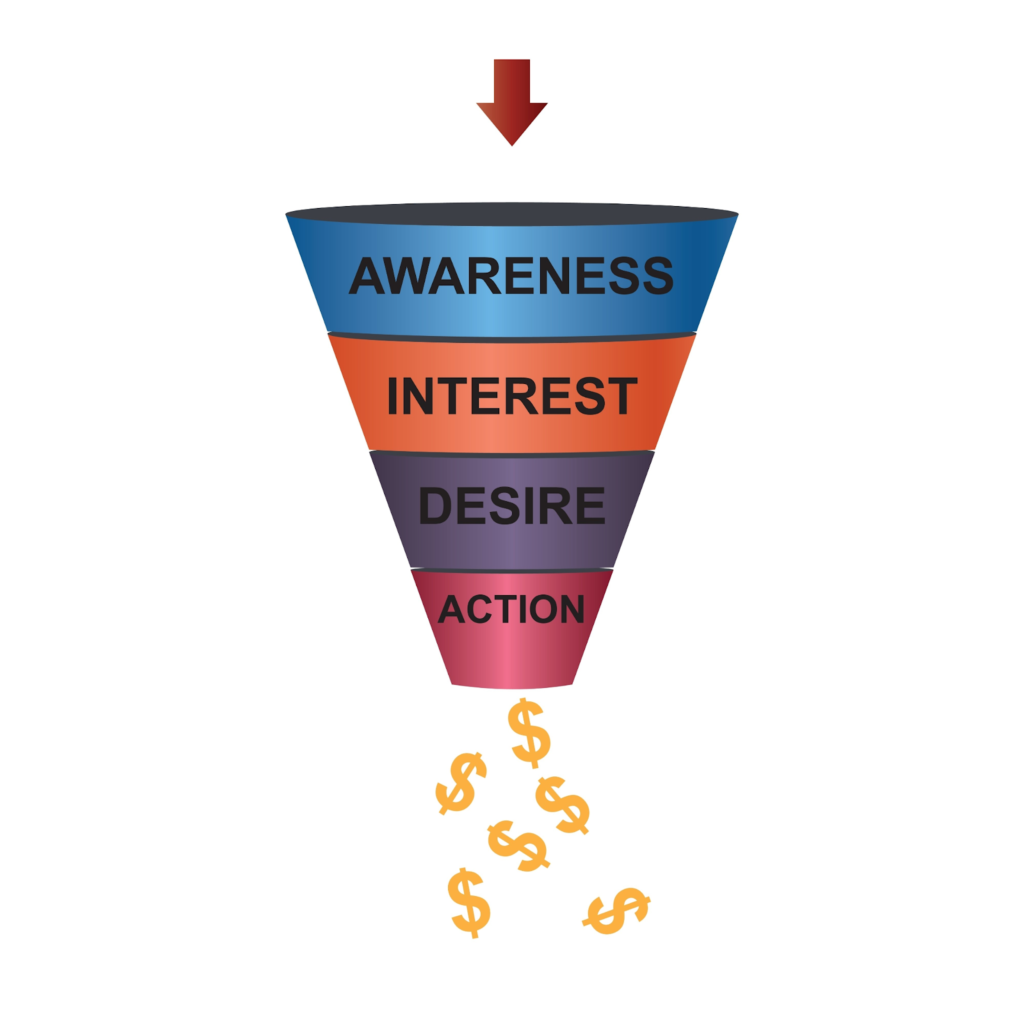
Think of your affiliate business as a funnel that guides a stranger from their first interaction with your brand to a final purchase. Success in this business is not just about getting clicks; it is about building a relationship that leads to a sale.
Driving Traffic (SEO, Social, Ads)
The top of your funnel is all about visibility. You can drive traffic using organic methods like SEO and social media, or through paid strategies like search engine ads. The key is to meet your audience where they already spend their time.
If your niche is highly visual, such as home decor, platforms like Pinterest or Instagram may be your best source of traffic. If you are solving technical problems, search engines will likely be your primary driver.
Building Trust with Content
Once someone lands on your site, your goal is to build trust. In a world full of AI-generated content, readers value a human perspective. Share your personal experiences with products, include original photos, and be honest about any drawbacks you find. When you prioritize helping the reader over making a quick commission, they are much more likely to value your recommendations. Trust is the currency of affiliate marketing; without it, your traffic will never convert.
Converting Visitors into Buyers
The conversion stage happens when a reader clicks your affiliate link and makes a purchase. To encourage this, your content needs to lead them toward a logical conclusion. Use clear calls to action that tell the reader exactly what to do next. For example, instead of a simple link, you might use a button that says Check the latest price on Amazon. Providing comparison tables or quick-glance pros and cons lists can also help a reader make a final decision quickly.
Using Email for Repeat Conversions
Email marketing allows you to turn a one-time visitor into a long-term fan. By offering a free resource, such as a printable checklist or a mini-course, you can capture email addresses and stay in touch with your audience. This gives you the opportunity to recommend other relevant products over time. An email list is one of the few assets in digital marketing that you own entirely, making it a powerful tool for consistent, recurring income.
Best Affiliate Marketing Programs and Networks
There are thousands of affiliate opportunities available, but they generally fall into two main categories: networks and direct programs. Choosing the right one depends on your niche and your audience’s preferences.
Affiliate Networks
Affiliate networks act as a middleman between you and hundreds of different brands. They provide a single dashboard where you can find products, generate links, and track your earnings. This makes them a great choice for beginners who want to manage everything in one place.
Some of the most popular networks include:
- Amazon Associates: Perfect for physical products and household names.
- ShareASale: Known for a huge variety of niche and independent brands.
- ClickBank: A go-to for digital products, software, and online courses.
- Impact: A professional platform favored by major brands for direct partnerships.
Direct Affiliate Programs
Some companies manage their own affiliate programs rather than using a network. These direct programs often offer higher commission rates because the company does not have to pay a fee to a network. Brands like Nike, HubSpot, and many specialized software companies have their own dedicated portals. If there is a specific brand you love, it is always worth checking the footer of their website for an affiliate or partner link to see if they offer a direct program.
How to Choose the Right Program
When evaluating a program, look beyond the commission percentage. Consider the cookie duration, which is the amount of time you have to earn a commission after someone clicks your link. A 90-day cookie is much better than a 24-hour one.
You should also check the reputation of the brand and the quality of the marketing materials they provide. The best program is one that offers a high-quality product your audience actually needs at a price they are willing to pay.
Essential Skills for Affiliate Marketers
To succeed as an affiliate marketer in 2026, you need to be more than just a writer. You need to develop a well-rounded set of skills that allow you to manage a digital business effectively.
Content Writing and Copywriting
Writing for the web is a specific skill. You need to be able to create educational content that keeps people engaged, but you also need to understand copywriting, which is the art of persuasion. The best affiliate content balances these two. You provide genuine value and education first, and then use persuasive writing to show the reader why a specific product is the right solution for their problem.
SEO and Traffic Generation
Understanding how people find information online is critical. You do not need to be a technical genius, but you should understand the basics of keyword research, link building, and how search engine algorithms work. Being able to look at a topic and understand what people are actually searching for will give you a massive advantage over competitors who are just guessing.
Data Analysis and Optimization
Once your site is live, you will have access to a lot of data. You should be able to look at your analytics to see which pages are getting traffic but not generating sales. This allows you to optimize your content by changing your calls to action, updating old information, or testing different layouts. Successful marketers use data to make informed decisions rather than relying on gut feelings.
Personal Branding and Trust Building
In the age of AI, your personal brand is your greatest asset. People want to hear from real experts who have actually used the products they are talking about. Developing a unique voice and a consistent brand across your website and social media helps you stand out. When your audience feels like they know and trust you, they are much more likely to follow your advice and use your affiliate links.
Common Affiliate Marketing Mistakes to Avoid
Even with a solid plan, many beginners stumble because they fall into predictable traps. Avoiding these common errors saves you months of wasted effort and helps you build a more professional brand from day one.
Choosing the Wrong Niche
Many people pick a niche based solely on high commission rates rather than their own knowledge or interest. If you choose a topic like high-end financial software just for the payouts, but you have no interest in finance, your content will lack the depth and authenticity required to build trust. A wrong niche can also be one that is too broad, like health, making it impossible to compete with established giants.
Promoting Low-Quality Products
Your reputation is your most valuable asset. If you recommend a product that breaks or fails to deliver on its promises, your audience will never trust your advice again. It is tempting to promote anything that offers a high commission, but professional affiliates vet every product. If you would not recommend it to a friend, do not recommend it to your audience.
Ignoring SEO
Relying solely on social media or word of mouth is a risky strategy. Search Engine Optimization provides the long-term, passive traffic that allows an affiliate business to grow while you sleep. Without a basic understanding of how to rank your content for relevant keywords, you are essentially starting from zero every time you post.
Not Building an Email List
Social media algorithms change and search engines update their ranking factors. If you do not have an email list, you do not own your audience. Failing to capture emails means you lose the chance to follow up with visitors and recommend products that could help them in the future.
Focusing Only on Sales
If every single post or article you create is a sales pitch, people will stop tuning in. The most successful affiliates follow a value-first approach. They provide helpful, educational information most of the time and only use promotional content sparingly. When you focus on solving problems rather than just closing sales, the commissions tend to follow naturally.
How to Scale Affiliate Marketing (Advanced)
Once you have a single profitable niche or website, you should stop thinking like a freelancer and start thinking like a business owner. Scaling requires moving away from doing everything yourself and focusing on systems.
Building Multiple Income Streams
Relying on a single affiliate program is a major vulnerability. If that merchant lowers their commission rates or closes their program, your income could disappear overnight. Scaling involves diversifying. This could mean joining multiple networks, finding direct brand deals, or even creating your own digital products to sell alongside your affiliate recommendations.
Outsourcing Content Creation
You only have so many hours in a day. To grow, you eventually need to hire specialized writers, editors, or video producers. By creating a content style guide and hiring experts, you can increase your publishing frequency without sacrificing quality. This allows you to focus on high-level strategy and partnership building.
Automating Affiliate Systems
Technology can handle many of the repetitive tasks in your business. Use tools to automate your social media posting, email sequences, and link tracking. Advanced affiliates use dashboards to aggregate data from multiple networks, allowing them to see exactly which campaigns are the most profitable at a glance.
Expanding into Multiple Channels
If you started with a blog, scaling might mean launching a YouTube channel to reach a different demographic. If you are a video creator, you might build a website to capture search traffic. An omnichannel approach ensures that you are meeting your audience wherever they prefer to consume content, making your brand more resilient.
How Much Can You Earn with Affiliate Marketing?
It is important to have realistic expectations. Affiliate marketing is not a get-rich-quick scheme; it is a performance-based business.
Most beginners spend the first few months earning very little as they build their foundation. It is common to see anywhere from $0 to $500 per month during the first year. However, once your traffic scales and your authority grows, an intermediate marketer can realistically earn between $1,000 and $5,000 per month.
Advanced affiliates and super affiliates who manage multiple sites or large communities can earn $10,000 to $50,000 per month. The ceiling is incredibly high, but reaching those levels requires a combination of high-value niches and sophisticated scaling systems.
Is Affiliate Marketing Worth It in 2026 and Beyond?
The short answer is yes, but the landscape is changing. In 2026, the rise of AI-generated content means that generic information is no longer valuable. To succeed now, you must lean into your humanity.
Personal stories, original research, and unique video demonstrations are the things AI cannot replicate easily. Trends are shifting toward social commerce and highly specialized niche communities. As long as people continue to look for expert recommendations before they buy, affiliate marketing will remain a highly profitable business model for those willing to do the actual work.
FAQs About Affiliate Marketing
Do I need a website to start affiliate marketing?
Technically, no. You can promote links on social media or YouTube. However, owning a website is highly recommended because it gives you full control over your content and SEO.
How long does it take to see results?
Most people start seeing their first commissions within 3 to 6 months of consistent work. It typically takes 12 to 18 months to build a full-time income.
What are the best traffic sources for affiliate marketing?
SEO is the best for long-term passive traffic. YouTube is excellent for high trust and conversions. Paid ads are the fastest but require a budget and experience.
Is SEO better than paid ads for affiliate marketing?
SEO is better for building a long-term asset with high profit margins. Paid ads are better for scaling quickly if you already have a proven offer and a high budget.
What are the best affiliate programs for beginners?
Amazon Associates is the easiest to join and understand. ShareASale and Impact are also beginner-friendly and offer a wide range of brands.
How do I choose a profitable affiliate niche?
Look for a balance of three things: a topic you are interested in, a niche with products that cost over $50, and a niche where people are actively looking for solutions to problems.
What skills do I need to succeed?
The most important skills are basic copywriting, an understanding of SEO, and the ability to analyze data to see what is working.
Can I start affiliate marketing with no investment?
Yes, you can start for free on platforms like YouTube or social media. However, eventually spending $10 to $15 a month on a domain and hosting is a wise investment.
Should I join an affiliate marketing course or learn for free?
You can find almost everything you need for free on YouTube and blogs. Only buy a course if you feel you need a structured, step-by-step roadmap to save time.
Is affiliate marketing still profitable today?
It is more profitable than ever, but it is also more competitive. Success today requires higher-quality content and a stronger focus on building a real brand.
Can affiliate marketing become a full-time business?
Absolutely. Many people have turned their affiliate sites into multi-million dollar companies by focusing on topical authority and scaling their systems.