
The transition of artificial intelligence from a back-end processing tool to an active creative partner is rewriting the rules of commercial engagement. Across the United States, enterprise marketing operations have moved past the initial phase of novelty automation.
Marketing executives are deploying advanced models to architect multi-channel campaigns, orchestrate real-time consumer personalization, and defend organic search visibility against shifting engine algorithms.
The core challenge for modern enterprise leaders centers on structural execution. Carelessly deploying algorithmic systems risks eroding brand equity, compromising data compliance, and alienating core consumer demographics. Maintaining an authentic brand voice while scaling output requires a precise understanding of where machine calculation ends and human intuition must intervene. This operational guide establishes a blueprint for integrating predictive and generative systems into live marketing pipelines without compromising institutional trust.
Why Generative AI Has Become a Major Force in Marketing
Traditional digital execution faces severe structural bottlenecks. Launching an omnichannel initiative demands simultaneous, high-intensity coordination across multiple specialized disciplines.
- Market research pipelines require continuous manual data parsing.
- Audience segmentation demands deep statistical analysis.
- Creative teams experience production delays while generating cross-platform visual assets.
- Search optimization specialists spend hours aligning copy with semantic updates.
These requirements create a significant operational drag, delaying time-to-market and limiting the capacity for real-time testing.
Generative architecture breaks this bottleneck by processing foundational tasks concurrently. Instead of spending weeks adjusting creative variants for localized regions, teams deploy unified models to produce hundreds of tailored assets in minutes.
The primary business benefit is not the reduction of headcount, but the reallocation of human capital. By shifting repetitive design and copywriting tasks to automated models, experienced strategists can dedicate their time to high-level positioning, cultural alignment, and deep consumer empathy.
The Technology Behind Generative AI Marketing
Modern marketing automation relies heavily on Large Language Models and diffusion networks trained on expansive text and visual datasets. These frameworks process semantic relationships, identify contextual nuances, and recognize behavioral patterns within unstructured text. By utilizing deep transformers, the software predicts optimal messaging combinations based on historical engagement patterns.
Marketers use structured prompt matrices to direct these models toward specific enterprise objectives.
- Predictive Copywriting: Generating high-intent variations of paid social advertisements tailored to specific consumer segments.
- Structural eCommerce Assets: Producing standardized, clear, and feature-dense product descriptions for thousands of stock-keeping units.
- Lifecycle Sequencing: Constructing automated email journeys that adapt dynamically to shopping cart abandonment indicators.
- Visual Prototyping: Rendering storyboards and conceptual layouts for video ad units prior to full-scale studio production.
The utility of these systems depends on the quality of their inputs. Enterprise organizations feed proprietary brand voice guidelines, past campaign metrics, and explicit performance data into their localized models to ensure the generated outputs are highly accurate and aligned with the brand’s identity.
How Generative AI Fits Into the Customer Journey
Building Awareness
At the top of the funnel, the priority is maintaining a consistent multi-channel presence. Algorithmic generation assists teams in creating informative top-level blog architecture, script treatments for short-form video channels, and diverse text variations for paid search environments. This scalable production model ensures that brands remain visible across various touchpoints without depleting their creative resources.
Supporting Consideration
As prospective buyers move into deeper evaluation phases, the content must shift toward greater technical precision. Systems generate detailed product comparisons, structure information for whitepapers, and build highly targeted email nurturing tracks. By analyzing common consumer friction points, the platform structures educational content that directly addresses specific objections.
Improving Conversions
At the point of transaction, minor adjustments in copy significantly influence final outcomes. Models optimize conversion mechanics by generating dynamic landing page headlines, clear checkout copy, and customized retargeting incentives. Brands use these automated variations to run continuous split testing, allowing real-time consumer behavior to dictate the final messaging layout.
Strengthening Customer Retention
Post-purchase engagement heavily influences customer lifetime value. Automation addresses this by personalizing onboarding documentation, drafting loyalty milestones, and structuring contextually accurate customer support resources. Providing targeted, immediate support after a sale lowers churn rates and encourages repeat purchases.
Content Marketing at Scale
Scaling content production requires a strict balance between volume and structural integrity. Enterprise teams deploy machine workflows to handle the initial stages of creation, which helps reduce the time spent on early-stage drafting.
- Structuring detailed content briefs based on search intent.
- Compiling structural outlines for comprehensive guides.
- Drafting social media captions adjusted for platform-specific constraints.
- Creating clean summaries of internal corporate reports.
Publishing raw machine output without human oversight presents significant risks. High-performing digital strategies rely on a collaborative model where software drives scale, and human experts manage verification. Editors inject real-world case studies, ensure compliance with brand standards, and verify that all factual claims are completely accurate. This approach delivers efficiency while maintaining a high standard of quality.
Search Is Changing Faster Than Most Businesses Realize
The search landscape is undergoing a fundamental shift away from traditional index-and-link models toward direct answer synthesis. Users increasingly interact with search interfaces that deliver complete paragraphs of information, pulling data from across the web directly into a single conversational window.
This development forces a transformation in search engine optimization. Success is no longer determined solely by keyword placement or backlink volume; it depends on source visibility. Brands must structure their digital footprints so that discovery engines can easily parse, validate, and cite their content inside synthesized answers.
| Optimization Vector | Traditional Approach | AI Synthesis Approach |
| Content Structure | Long-form keyword targeting | Direct answers with clear data schemas |
| Authority Signal | General backlink counts | Expert citations and verified insights |
| Discovery Metric | Click-through rate from SERP | Source visibility within generated summaries |
Content strategies must emphasize directness and clarity. To be cited by generative search systems, enterprise material must present verified factual data, clear structural formatting, and unequivocal industry expertise. General or repetitive summaries fail to clear this algorithmic bar.
Personalized Marketing Without Massive Teams
Delivering highly relevant experiences to diverse consumer groups typically requires substantial human resources. Automation solves this challenge by enabling micro-segmentation at scale, allowing small teams to manage complex personalization programs effectively.
- Dynamic Email Customization: Modifying email subject lines to match individual user browsing histories.
- Behavioral Product Recommendations: Displaying precise product suggestions based on real-time browsing patterns.
- Adaptive Web Interfaces: Changing landing page layouts to display industry-specific case studies based on inbound visitor demographics.
- Tailored Ad Creative: Deploying distinct ad variations tailored to specific buyer personas from a single baseline campaign.
This approach moves away from broad demographics toward individualized, behavior-based messaging. Automated systems analyze interactions as they happen, matching consumer intent with the most relevant brand asset. This level of responsiveness drives higher conversion rates while reducing the need for constant manual campaign adjustments.
Advertising Is Becoming More Automated
Paid media channels have adopted algorithmic infrastructure faster than almost any other sector of marketing. Major ad networks now require buyers to upload baseline creative components, leaving budget distribution and asset pairing to internal machine systems.
This structural shift transforms the day-to-day role of media buyers. Instead of manually adjusting daily bids or micro-managing individual keyword targets, professional advertisers focus on system inputs and strategic guardrails. Specialized machine agents can adjust live budgets across networks instantly, responding to performance dips or sudden spikes in consumer demand.
This automated environment rewards distinct visual assets and strong strategic positioning. When distribution and optimization are entirely automated, campaign performance ultimately hinges on the quality of the primary assets provided to the system.
Email Marketing Is Getting Smarter
Modern email communication uses automated modeling to create highly responsive, behavioral lifecycle journeys. Rather than blasting a generic newsletter to an entire database, systems analyze historical engagement to determine the optimal timing, frequency, and content for each recipient.
- Building multi-stage welcome journeys that adjust to initial click patterns.
- Triggering precise re-engagement campaigns when account activity drops below set thresholds.
- Deploying personalized cart abandonment incentives that adjust based on total cart value.
- Generating variation matrices for continuous split-testing of subject lines.
This level of automation ensures communication feels helpful rather than intrusive. By sending messages that align with actual consumer actions, brands improve open rates and protect their domain sender reputation.
Customer Data Is Becoming More Actionable
The modern enterprise is rarely starved for information; the real bottleneck is data interpretation. Machine learning platforms parse massive streams of customer behavioral data to convert fragmented logs into clear, actionable strategies.
These analytical systems process information at a scale that manual analytics teams cannot match. By tracking cross-channel interactions simultaneously, the software uncovers subtle behavioral shifts early. This allows marketing teams to address emerging friction points, refine active target audiences, and reallocate budgets before performance trends begin to decline.
Where Human Marketers Still Hold the Advantage
Algorithmic software excels at analyzing historical datasets and identifying structural correlations within complex tracking loops. It cannot replicate the deeply intuitive qualities that allow creative professionals to build lasting emotional connections with a human audience.
Experienced strategists possess an intrinsic understanding of cultural nuance, local slang, and shifting social contexts. An automated model relies entirely on historic text patterns, leaving it vulnerable to producing tone-deaf responses during unexpected societal shifts or market disruptions.
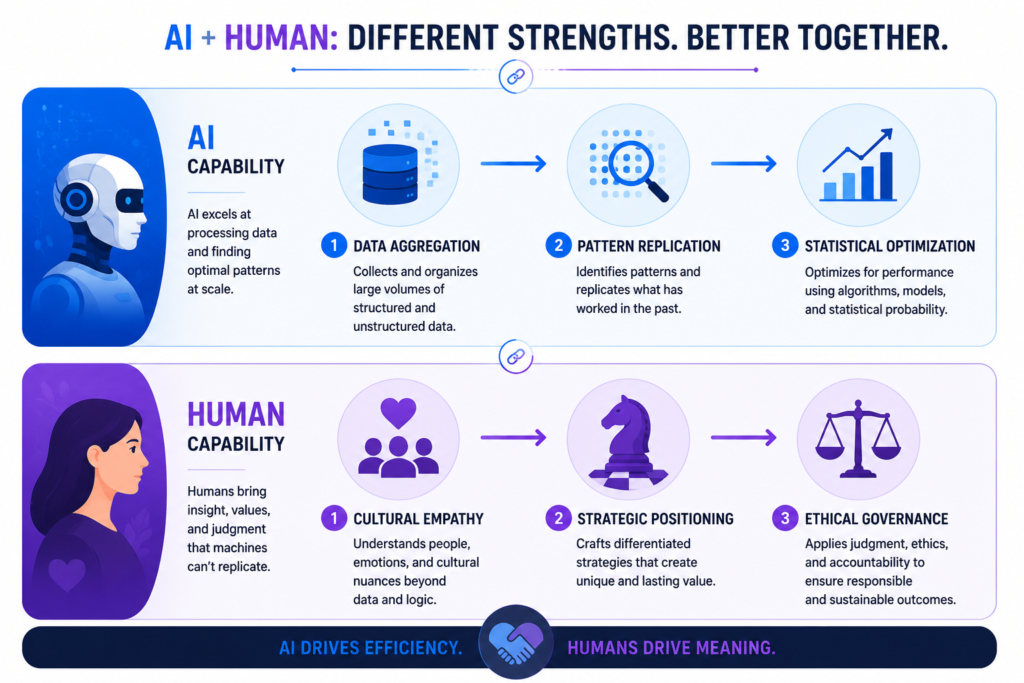
Human oversight is also critical for establishing high-level strategic positioning. While a machine can generate fifty variations of an advertising slogan based on past performance metrics, it cannot define a company’s core mission or create a disruptive brand identity from scratch.
True creative breakthroughs usually come from breaking established rules rather than following statistical averages. Because machine learning systems are trained to predict the most probable next word or pixel, they tend to produce middle-of-the-road creative outputs that risk making a brand look generic.
Common Mistakes Businesses Make
The rush to integrate automated processes has led many organizations into significant operational missteps. These errors frequently degrade search engine visibility, alienate existing customer bases, and dilute hard-earned brand equity.
- Publishing Unedited Output: Relying on raw machine content results in repetitive, uninspired text that fails to engage readers and often triggers algorithmic ranking penalties.
- Neglecting Brand Guidelines: Deploying foundation models without fine-tuning them on proprietary style guides leads to fragmented, inconsistent messaging across marketing channels.
- Prioritizing Quantity Over Value: Flooding digital channels with generic, mass-produced content lowers domain authority and pushes prospective buyers toward more authentic competitors.
- Over-Automating Sensitive Touchpoints: Substituting human community managers or specialized support staff with rigid, unaligned conversational agents frustrates users during critical moments of friction.
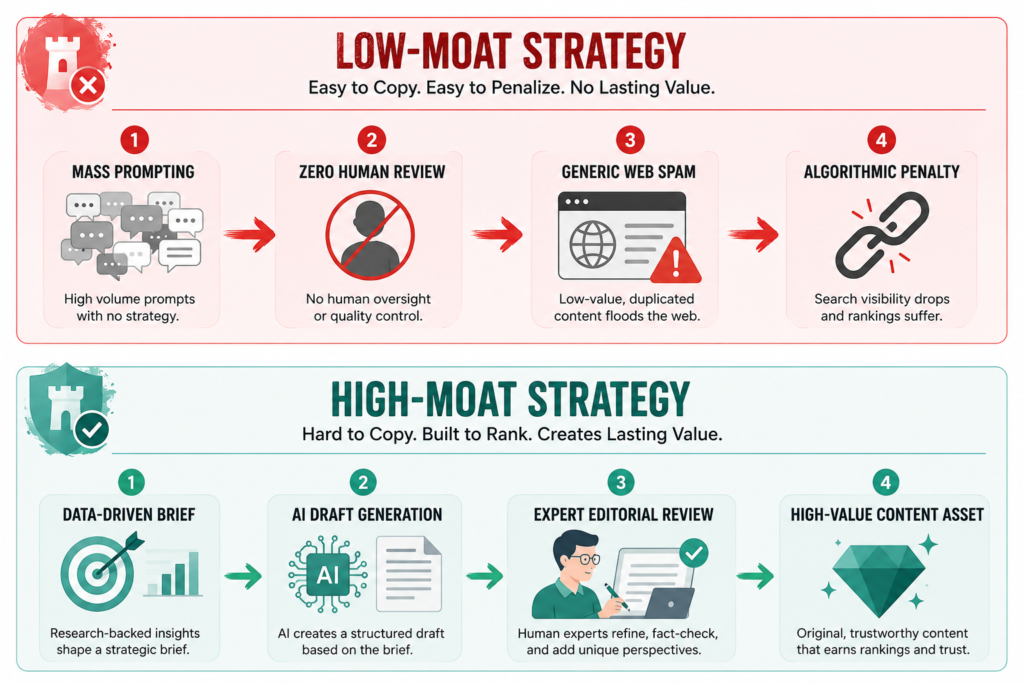
To prevent these errors, organizations must implement strict content validation protocols. Every automated asset requires formal review by an internal specialist to verify factual claims, align the tone with brand guidelines, and ensure the material offers genuine value to the end user.
The Current State of Generative AI Adoption in U.S. Marketing
Recent data highlights a significant gap between initial software experimentation and structural business impact. While the technology is used across almost all major marketing organizations, extracting measurable financial returns remains a distinct challenge for most enterprise companies.
| Key Enterprise Metric | Current Value | Primary Strategic Source |
| Global Enterprise AI Adoption | 88% | McKinsey Global AI Research |
| Marketing Tasks Run by AI | 24.2% | Duke University & Deloitte CMO Survey |
| Meaningful Bottom-Line ROI | 6% to 29% | McKinsey / Writer Enterprise Survey |
| Projected 3-Year Activity Share | 55.9% | U.S. CMO Survey Projections |
This variance points to a clear division in how companies approach the technology. The small percentage of organizations driving real financial returns do not use these tools casually. Instead, they embed their proprietary institutional data directly into specialized workflows to preserve their unique brand voice and protect their market positioning.
Investment patterns also show that modern Chief Marketing Officers face tightening constraints. According to industry data, overall marketing budgets remain steady at 7.7% of total company revenue. This forces leadership teams to fund their technological upgrades by shifting resources away from traditional execution models rather than relying on new capital injection.
The Direction Marketing Is Heading
The digital ecosystem is rapidly moving past simple chat interfaces toward autonomous agentic architectures. Unlike basic systems that require continuous human prompting for every single output, these advanced frameworks can plan, navigate, and execute multi-stage marketing campaigns independently.
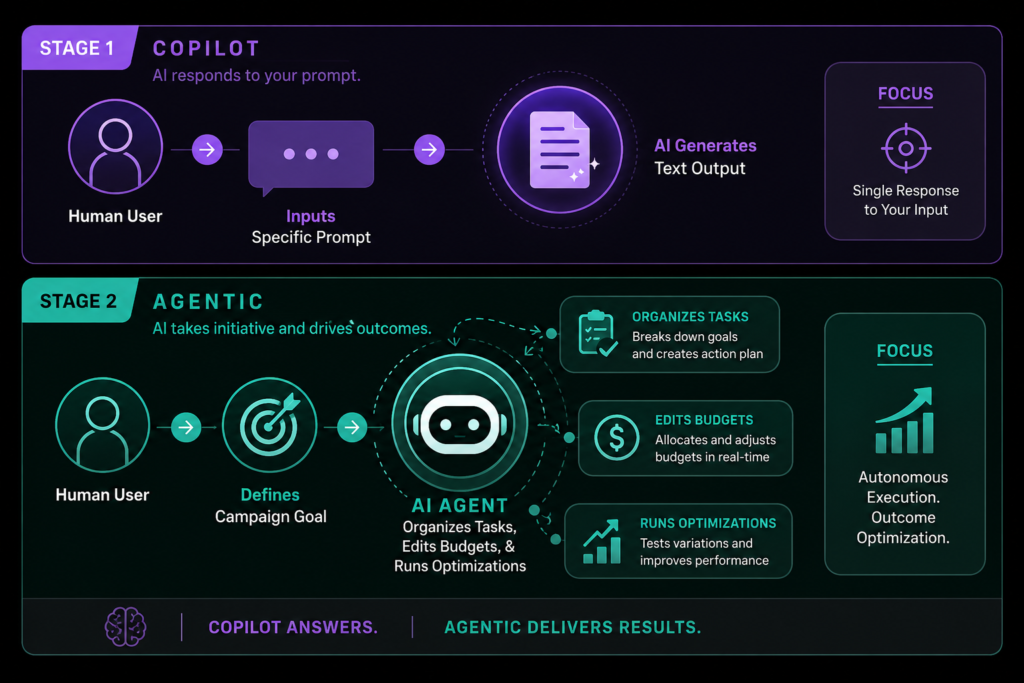
This structural shift transforms how professional marketers interact with enterprise software. Instead of spending time managing individual software tools, strategists act as system directors. They establish performance goals, outline clear compliance guardrails, and continuously review the creative outputs produced by autonomous systems.
For brands looking to maintain long-term digital relevance, success requires finding the right balance between systemic scale and genuine human authenticity. The companies that thrive will use these automated systems to handle resource-heavy operations, while keeping experienced human professionals in complete control of strategic vision, brand identity, and customer relationships.
This video analyzing AI Marketing Trends outlines the transition from basic task automation to strategic agentic systems, offering direct insights into how modern search dynamics affect brand visibility.