Gmail is the primary identity provider for the modern data-driven economy. Since 2004, it has evolved from a simple inbox into a massive onboarding engine that anchors billions of users within the Google closed ecosystem.
Also, it serves as the essential authentication layer that makes platforms like Search and YouTube profitable by linking every click to a specific, verified human identity.
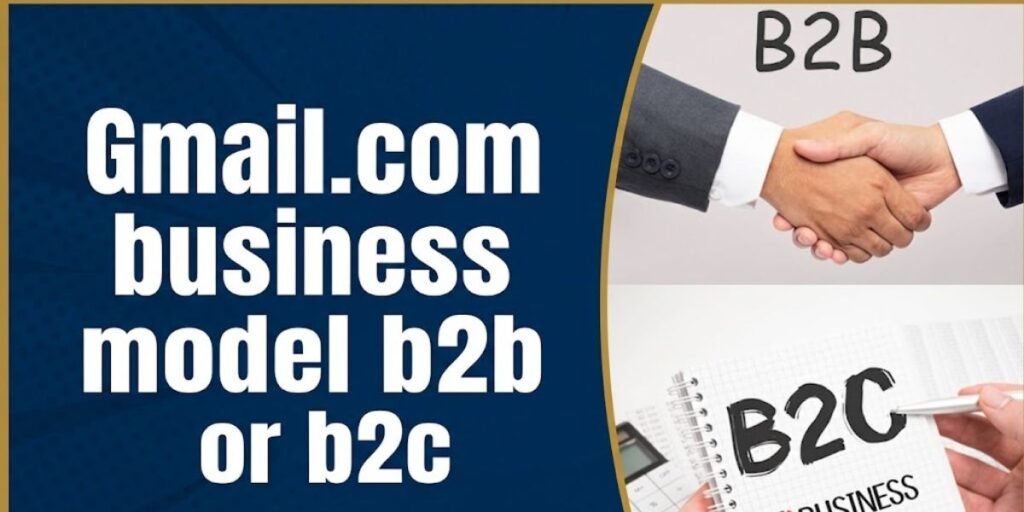
To understand the gmail.com business model b2b or b2c structure, one must view it through a dual lens. It operates as a B2C freemium product for individuals, offering high-utility tools in exchange for ecosystem loyalty, and a high-margin B2B SaaS platform via Google Workspace.
In an era where Google generates over 9,000 dollars every single second, Gmail remains the glue binding a 200 billion dollar advertising machine to its global user base.
This article dissects how this hybrid model fuels the world’s most successful revenue engine.
About Gmail Beyond Free Email
Most people view Gmail as a utility, but for Google, it is a strategic user-acquisition funnel. The moment a user signs up for a Gmail address, they are receiving a universal passport to the entire suite of Google services. This integration is designed to increase stickiness and ensure that the user rarely feels the need to leave the Google environment.
When a user is active in Gmail, they are automatically feeding into a larger framework:
- Search Intent Personalization: By understanding your subscriptions and receipts, Google can better predict what you are looking for in search.
- YouTube Synchronization: Your email identity saves your viewing history and builds a cross-platform interest profile.
- Asset Centralization: Google Drive and Photos offer 15GB of free storage, making it the default digital home for your most important files.
- Authentication Infrastructure: The Sign in with Google button extends Google’s data reach across millions of third-party sites.
The Core Structure of Gmail’s Business Model
The brilliance of the Gmail business model lies in its multi-layered monetization strategy. It does not rely on a single revenue stream. Instead, it captures value from different segments of the economy simultaneously through distinct B2C and B2B channels.
B2C Layer (Free Gmail Users)
This is the consumer-facing side of the business. It follows a B2C or Business-to-Consumer model where the service is provided at no monetary cost. With over 1.8 billion active users, Gmail holds a dominant market share in the personal email space.
Economically speaking, these users are the inventory for the Google advertising business. Every email about a flight, a car purchase, or a subscription is a high-intent signal.
While Google stopped scanning emails for ad content in 2017, the metadata and the fact that a user is logged in allow Google to serve hyper-targeted ads across its other platforms, like Search and YouTube.
B2B Layer (Google Workspace)
The B2B or Business-to-Business layer is where Gmail functions as a traditional SaaS product. Companies pay a monthly subscription fee per user to access professional features. This segment provides a stable, recurring revenue stream that is less volatile than the advertising market. Key features include:
- Custom Branding: Managing professional domains like name@company.com rather than the generic gmail.com domain.
- Advanced Security: Enhanced encryption, Data Loss Prevention, and administrative controls.
- Enterprise Storage: Massive storage limits that far exceed the 15GB consumer cap.
Indirect Monetization Layer (Advertising Engine)
This is the model’s most powerful component. Gmail keeps users persistently authenticated. In the world of digital advertising, particularly in paid social media campaigns, a logged-in user is worth significantly more than an anonymous one because it allows for precise attribution data, tracking the journey from an initial search to a final purchase.
Gmail Money-Making Strategy
The Gmail strategy is built on scaling first and monetizing later. By offering a best-in-class product for free, Google effectively raised the switching cost for users, creating a monopoly on digital identity.
This significantly lowers the Customer Acquisition Cost for other paid services. As a user’s professional needs grow, Google seamlessly transitions them from free storage to paid Google One or Google Workspace plans.
Google Revenue Breakdown and Where Gmail Fits
To understand where Gmail fits into the grand scheme, we have to look at the Alphabet revenue pillars. According to official financial disclosures, revenue is categorized into three main buckets:
| Revenue Segment | Description | Gmail Role |
| Google Search & Other | The core advertising engine. | Indirect Support: Provides the logged-in identity for ad targeting. |
| Google Cloud | Includes Google Workspace and Cloud Platform. | Direct Revenue: Subscriptions from B2B Workspace users. |
| YouTube Ads | Video-based advertising. | Ecosystem Support: Links user interests to video content. |
Gmail is the rare product that feeds into all three pillars simultaneously. It drives Cloud revenue through subscriptions, Search revenue through identity, and YouTube revenue through interest-based profiles.
How Much Money Does Google Make a Second?
The scale of Google’s earnings is almost impossible to comprehend without breaking it down into small units of time. Based on recent annual revenue exceeding 300 billion dollars, the numbers are staggering:
- 9,512 dollars every single second.
- 570,720 dollars every minute.
- 34.2 million dollars every hour.
While you are reading this sentence, Google has likely generated over 50,000 dollars. Gmail is the foundational layer of this wealth, ensuring that the users interacting with ads are verified, tracked, and profiled for maximum advertiser ROI.
So, Is Gmail B2B or B2C?
The most accurate classification for Gmail is a Hybrid SaaS Identity Platform.
- B2C: A free personal communication tool for billions.
- B2B: A paid professional suite for millions of corporations.
- SaaS: A cloud-delivered service based on a freemium-to-subscription funnel.
Labeling it as just one or the other ignores the cross-platform synergy that makes Google so dominant. It is a bridge between the average consumer and the corporate world.
Why Gmail Is Considered a Hybrid SaaS Platform
Gmail is a textbook example of a hybrid SaaS platform because it successfully blends a consumer-grade UI with enterprise-grade infrastructure. It uses a freemium model to capture 90 percent of the market and then monetizes the top tier through advanced features.
This model is highly efficient because the same infrastructure serves both a student and a CEO, maximizing profit margins through extreme economies of scale.
Final Thoughts
Gmail is far more than a digital mailbox; it is the strategic epicenter of the Google business model. By providing a high-utility, free service, Google has secured the most valuable asset in the digital age, which is verified human identity.
In summary, Gmail functions as:
- A user acquisition funnel that brings billions into the Google ecosystem.
- A recurring revenue stream via Google Workspace B2B subscriptions.
- A data signal provider that increases the precision and price of the advertising inventory.
Whether you are a free user or a paying corporate client, Gmail is the tool that keeps you connected to Google services. It is a masterpiece of modern business engineering that proves that a free product can be the most profitable asset in a company’s portfolio.
Analyzing the gmail.com business model b2b or b2c reveals that the real value lies in the hybrid connectivity of the platform.
FAQs
Is Gmail B2B or B2C?
Gmail is a hybrid. It is a B2C product for individual users and a B2B product for businesses through the Google Workspace suite.
What is the Gmail business model?
It relies on a freemium model that combines free user acquisition, recurring SaaS subscriptions for professionals, and indirect monetization through advertising data.
How does Gmail make money?
It generates direct revenue from Google Workspace subscriptions and indirect revenue by providing the identity tracking that makes Google Ads more valuable to advertisers.
What is the difference between B2B and B2C?
B2B involves selling to other companies, while B2C involves selling directly to individual people.
Is Google Workspace part of Gmail?
No, it is the other way around. Gmail is one of the many applications, like Docs, Drive, and Meet, that make up the paid Google Workspace suite.
Why is Gmail free?
It is free for consumers because it allows Google to build a massive, logged-in user base. This presence is essential for maintaining the data advantage that powers their 200 billion dollar plus advertising business.