
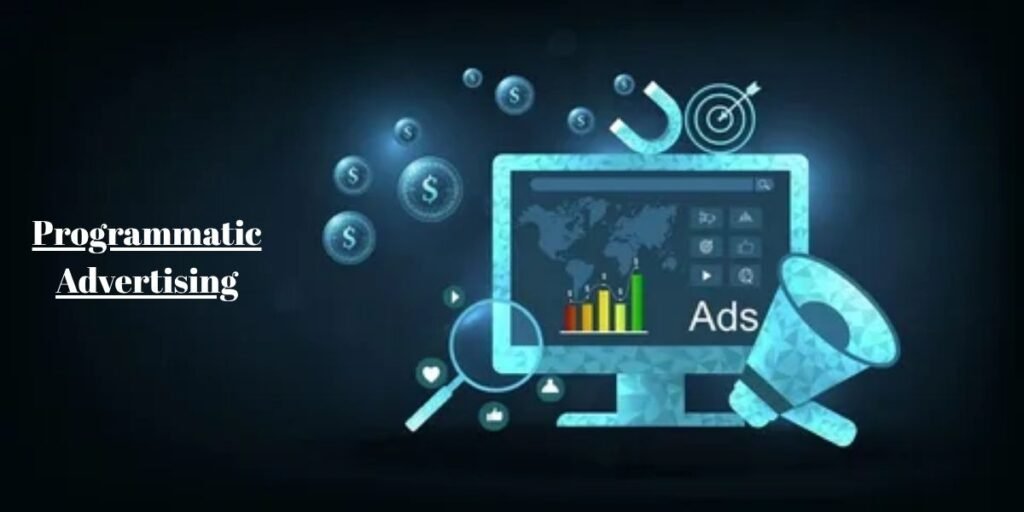
Digital marketing managers today face an overwhelming reality when they open their browser tabs. Media channels are fragmented across connected living room screens, mobile apps, social feeds, audio streaming services, and transit shelter displays. Trying to execute multi-channel campaigns through traditional manual insertions requires an army of media buyers sending spreadsheets, negotiating rates over email, and faxing insertion orders. That manual approach collapsed under its own weight years ago. Scale is no longer achieved by human negotiation. Scale is governed entirely by programmatic infrastructure.
Programmatic advertising is the invisible operating system running modern digital media. It is not simply another channel to test alongside paid search or social media. It is the automated execution engine powering display, video, native, and audio buys across the entire open web.
What Is Programmatic Advertising?
Programmatic advertising refers to the automated buying and selling of digital ad inventory using artificial intelligence and machine learning algorithms.
To understand why this shift occurred, look at how media buying used to function. Advertisers negotiated fixed pricing with individual publishers, locked themselves into multi-week contracts, and manually uploaded static banner graphics. That old paradigm cannot keep pace with modern consumer behavior. Users hop seamlessly between smartphones, connected television interfaces, and desktop browsers in seconds.
Programmatic advertising treats digital media as a liquid market. It uses algorithmic software to match available ad impressions with the most relevant advertiser parameters in milliseconds.
Crucially, programmatic is a buying method rather than an ad format. You do not buy a programmatic ad the way you buy a native banner or a pre-roll video. You build an ad creative in standard digital formats and use programmatic engines to deliver it dynamically. Automation matters because human processing speed cannot evaluate audience signals, check brand safety scores, and execute price auctions within a fraction of a second. Algorithms handle that computational load instantly.
Understanding the definition is only the beginning. The real value comes from understanding what actually happens every time a programmatic ad is purchased.
Inside a Programmatic Advertising Transaction
A consumer sitting on their living room sofa taps open a news application on a tablet. Within the 200 milliseconds it takes for the article text and images to render on screen, a complex financial auction concludes behind the scenes.
The moment the app loads, the publisher software recognizes an empty ad slot. That publisher needs to monetize the visitor’s attention. The software packages user metadata—such as device type, geographic location, contextual category, and browsing history—into an ad request.
This request shoots instantly to a Supply-Side Platform, known universally in the industry as an SSP. The SSP acts as the publisher’s digital sales agent. Its job is to push that available impression out to the wider market to generate the highest possible revenue.
The impression request lands inside an Ad Exchange, which functions as the open digital trading floor where supply meets demand. Hundreds of automated buyers connect to this exchange simultaneously.
On the buying side, a Demand-Side Platform, or DSP, acts as the advertiser’s automated trading desk. The DSP evaluates the incoming impression data against campaign rules established by marketing teams. It checks whether the user matches the target demographic, verifies that the brand safety thresholds are met, and calculates how much the advertiser is willing to pay based on current budget pacing.
If the user fits the campaign criteria, the DSP calculates an automated bid based on Real-Time Bidding, or RTB. RTB is the core transaction protocol that allows ad inventory to be bought and sold on a per-impression basis through instantaneous auctions. These auctions take less than 100 milliseconds to complete.
Behind these rapid calculations, advanced Machine Learning models evaluate historical performance data to predict whether this specific impression will result in a click, conversion, or view. The system factors in Audience Data, pulling from first-party brand files, contextual relevance markers, behavioral intent signals, and device identifiers.
The ad exchange collects all incoming bids from competing DSPs, selects the highest financial offer, and informs the publisher’s SSP of the winner. The winning creative asset is pulled from a content delivery network and renders on the user’s screen before the human eye registers the page finishing its load.
Not Every Programmatic Campaign Buys Inventory the Same Way
Navigating programmatic advertising requires understanding that not all auctions happen on an open public market. Different campaigns demand different levels of inventory control, pricing stability, and brand safety protection.
In an Open Marketplace, anyone can bid on available ad impressions. It operates like a public stock exchange. This model delivers massive scale and low entry costs, making it ideal for broad brand awareness initiatives and performance campaigns focused on high-volume traffic acquisition. However, open auctions expose advertisers to higher risks of ad fraud and variable inventory quality.
A Private Marketplace, often abbreviated as PMP, operates as an invitation-only auction environment. Premium publishers, such as major news networks or elite sports streaming apps, pool their most valuable inventory and offer it exclusively to hand-picked advertisers. PMPs provide superior brand safety, transparent placement visibility, and access to high-impact creative formats without the chaotic environment of the open web.
Preferred Deals eliminate the auction dynamic entirely. A brand and a publisher agree on a fixed, pre-negotiated price for a specific block of impressions. The advertiser gets first right of refusal on that inventory before it hits the open market. This model works exceptionally well for product launches where secure visibility on high-traffic homepages is non-negotiable.
Programmatic Guaranteed represents the closest digital equivalent to traditional direct media buying, infused with automation. The advertiser contracts with a publisher to buy a guaranteed volume of impressions at a fixed price. The transaction executes programmatically through the DSP, ensuring that the brand secures its required reach without participating in competitive bidding wars. Major consumer brands rely on programmatic guaranteed for seasonal tentpole campaigns where missing impression minimums breaks media planning strategies.
Where Programmatic Advertising Creates the Most Value
Early digital marketing siloed programmatic buying strictly into standard desktop display banners. Today, the technology powers almost every digital screen consumers encounter.
Display Advertising remains the foundational baseline of programmatic execution, utilizing standardIAB rectangle and leaderboard formats across millions of websites and blogs.
Video Advertising represents a massive share of programmatic spend, serving dynamic pre-roll, mid-roll, and out-stream video assets across news sites, entertainment portals, and video-sharing platforms.
Mobile Apps rely heavily on programmatic infrastructure to monetize mobile gaming environments, utility apps, and social feeds through interstitial banners and rewarded video placements.
Native Advertising blends seamlessly into editorial feeds, using programmatic rules to match the visual styling and typography of the host website, driving higher engagement rates than disruptive pop-ups.
Connected TV, or CTV, has transformed living room entertainment. Programmatic CTV allows advertisers to deliver targeted video ads through streaming devices like Roku, Apple TV, and smart TV operating systems, replacing traditional cable ad fragmentation with data-driven precision.
Digital Audio injects programmatic execution into music streaming services, podcasts, and digital radio broadcasts, enabling dynamic audio ad insertions based on listener demographics and geographic location.
Digital Out-of-Home, or DOOH, bridges the physical and digital worlds. Programmatic DOOH automates digital billboard displays in Times Square, transit stations, and gas stations, allowing marketers to change creative messaging dynamically based on weather conditions, traffic volume, or time of day.
Retail Media Networks operated by giants like Amazon, Walmart, and Target utilize programmatic engines to monetize on-site search results and off-site display inventory using rich, first-party shopping data.
Why Modern Targeting Looks Very Different Today
Marketers who built their careers on third-party tracking cookies find themselves navigating an entirely re-engineered targeting landscape. Privacy regulations like GDPR and CCPA, combined with Apple App Tracking Transparency policies and browser-level cookie deprecation phases, permanently altered how audience data flows through programmatic channels.
The industry has moved decisively away from invasive cross-site tracking toward privacy-safe alternatives. First-Party Data collected directly through customer loyalty programs, email sign-ups, and transactional history has become the primary fuel for DSP audience segmentation.
Contextual Targeting has experienced a massive resurgence. Instead of tracking a user’s personal identity across the web, modern programmatic engines analyze the semantic meaning of the page content they are currently viewing. An athletic brand running ads next to an article about marathon training knows the consumer is in a fitness mindset without needing to harvest personal identifiers.
Identity Solutions like Unified ID 2.0 offer hashed, encrypted email-based identifiers that allow authenticated cross-device measurement while respecting consumer opt-out choices.
Google’s ongoing evolution of privacy initiatives and the implementation of clean rooms—such as Amazon Marketing Cloud—allow brands to match their proprietary customer data with publisher insights in secure, aggregated environments without exposing raw user records. Modern targeting requires balancing personalization depth with uncompromising data privacy compliance.
When Programmatic Advertising Is the Right Investment
Programmatic advertising is a powerful mechanism, but it is not a universal solution for every marketing budget or business model. Knowing when to deploy programmatic requires a clear assessment of corporate objectives.
Programmatic excels in Ecommerce, where dynamic product retargeting ads can follow a shopper across the web displaying the exact items they left in their digital shopping cart. SaaS and enterprise technology companies use programmatic ABM (Account-Based Marketing) tactics to serve targeted display and video assets to decision-makers at specific target companies. Retail brands leverage programmatic scale to coordinate multi-location regional promotions, while B2B marketers use intent data signals to trigger programmatic bids when prospective buyers are actively researching industry solutions.
Conversely, smaller local businesses with modest budgets should often bypass programmatic DSPs. A local plumbing contractor or neighborhood bakery will achieve a much higher return on investment by concentrating their ad spend on localized Google Search campaigns or targeted Meta social ads rather than navigating the learning curve and minimum spend thresholds of enterprise programmatic platforms. Similarly, brands seeking immediate transactional conversions with hyper-specific search intent often find that paid search capture outperforms programmatic display prospecting.
What Determines Whether a Campaign Succeeds
Experienced media buyers do not evaluate campaign success by looking at generic checklists. They focus on the intricate mechanics that govern campaign profitability.
Campaign execution begins with crystal-clear Objectives mapped directly to business outcomes, separating upper-funnel brand lift goals from lower-funnel acquisition targets. Creative Quality dictates performance; even the most sophisticated programmatic targeting fails if the banner or video asset lacks a compelling hook and a clear call to action.
Audience Segmentation requires constant refinement to avoid audience fatigue and wasteful over-targeting. Frequency Capping is mandatory; hammering the same user with fifty ad impressions a day destroys brand equity and drains budgets on blind impressions.
Budget Allocation must be dynamic, shifting capital away from underperforming publisher domains and reallocating spend toward high-converting audience segments in real-time. Measurement frameworks must go beyond surface-level clicks, incorporating incrementality testing to prove whether programmatic exposure actually drove incremental sales that would not have happened organically.
Finally, the post-click experience matters immensely. Directing high-value programmatic traffic to slow, poorly designed Landing Pages guarantees high bounce rates and wasted ad spend. True campaign success requires seamless cross-channel consistency from the initial ad impression through final checkout.
The Benefits and Trade-Offs Every Advertiser Should Understand
Experienced practitioners view programmatic advertising through a balanced lens of operational power and inherent industry friction.
Benefits
- Automation at Scale: Replaces manual human negotiation with algorithmic execution across billions of daily opportunities.
- Precise Audience Targeting: Integrates first-party data, contextual signals, and behavioral insights to reach specific consumer cohorts.
- Efficient Budget Allocation: Dynamically shifts capital toward high-performing inventory sources in real time.
- Real-Time Optimization: Allows immediate mid-campaign adjustments to bids, pacing, and creative assets.
- Measurable Performance: Provides robust data feeds and analytics dashboards to track every dollar spent.
- Omnichannel Reach: Unifies display, video, mobile, CTV, and audio buys within a single unified operating interface.
Trade-Offs
- Transparency: Complex supply chains with multiple intermediary resellers can obscure where ads actually run and where fees are assessed.
- Supply Chain Complexity: The journey from advertiser to publisher involves numerous tech hops, creating potential points of technical friction.
- Ad Fraud: Automated systems remain vulnerable to sophisticated bot traffic, domain spoofing, and invalid traffic generation.
- Brand Safety Risks: Algorithms can misinterpret page context, placing premium brand ads next to controversial news or inappropriate content if strict blacklists are absent.
- Privacy Regulations: Evolving data protection laws require constant vigilance to maintain regulatory compliance across jurisdictions.
- Learning Curve: Enterprise DSPs require specialized technical expertise, making them challenging for untrained marketing teams to master.
- Commoditized Inventory: High-volume open exchange environments often race to the bottom on pricing, flooding feeds with low-visibility placements.
- Measurement Fragmentation: Discrepancies between attribution models across different DSPs and publisher reporting suites can complicate true ROI calculation.
Experienced marketing teams mitigate these trade-offs by enforcing strict domain whitelists, deploying third-party verification tools like IAS or DoubleVerify, continuously monitoring traffic quality reports, and maintaining proactive oversight over automated bidding parameters.
Measuring Success Beyond Click-Through Rate
Relying on click-through rates to measure programmatic campaigns is a relic of early internet marketing. Modern professionals evaluate performance using a comprehensive suite of financial and operational metrics tailored to specific campaign stages.
- Cost Per Mille (CPM): Measures the cost of one thousand ad impressions, serving as the foundational pricing metric for brand awareness campaigns.
- Cost Per Acquisition (CPA): Tracks the total financial investment required to drive a single completed conversion or sale, critical for performance-driven ROI.
- Return on Ad Spend (ROAS): Evaluates total revenue generated for every dollar spent on media execution.
- Reach and Frequency: Measures unique audience penetration and the average number of times an individual consumer saw the ad.
- Viewability: Tracks whether an ad impression was actually seen by a human user (such as the MRC standard of 50% of pixels in view for at least one second for display).
- Conversion Rate: Calculates the percentage of users who completed a desired action after interacting with the ad.
- Incrementality: Measures the true lift generated by the campaign by comparing exposed audiences against a control group that saw no ads.
- Attention Metrics: Analyzes dwell time, active interaction duration, and visual engagement beyond simple screen presence.
- Customer Lifetime Value (LTV): Assesses the long-term revenue contribution of customers acquired through programmatic campaigns.
For brand awareness objectives, media teams focus heavily on reach, frequency, viewability, and brand lift studies. For direct-response performance campaigns, metrics shift entirely toward CPA, ROAS, and conversion volume.
Frequently Asked Questions
Is Google Ads programmatic advertising?
Yes, Google Ads utilizes programmatic technology, particularly for its display network, YouTube inventory, and automated bidding algorithms. However, the term programmatic advertising typically refers to enterprise-grade DSPs like Amazon DSP or The Trade Desk that trade across open exchanges and multiple SSPs beyond a single walled garden.
What is the difference between a DSP and Google Ads?
A Demand-Side Platform provides access to an expansive, open ecosystem of publishers, third-party data providers, and multiple ad exchanges across the entire internet. Google Ads operates primarily as an advertising network focusing heavily on Google-owned properties like Search, YouTube, and the Google Display Network, though it does offer broader programmatic buying capabilities through its DV360 platform.
Does every programmatic campaign use real-time bidding?
No. While real-time bidding is the most common execution model for open marketplaces, programmatic technology also powers non-auction transactions such as programmatic guaranteed deals, preferred partnerships, and private marketplace fixed-price agreements.
How much budget do businesses typically need for programmatic advertising?
Programmatic advertising budgets vary widely based on platform selection and campaign scope. While small programmatic tests can launch with modest monthly media spends, enterprise DSPs often require managed service minimums or monthly commitments ranging from several thousand dollars upward due to the complexity of data licensing and platform fees.
Can small businesses benefit from programmatic advertising?
Small businesses can access programmatic capabilities through self-serve DSP interfaces or agency partners, but local businesses with limited capital often achieve more cost-effective results focusing on direct search marketing and localized social media platforms.
Is programmatic advertising replacing direct media buying?
Programmatic advertising has largely automated standard display and video media buying, but direct negotiations still occur for high-impact custom sponsorships, premium sports broadcasts, and complex influencer partnerships that require bespoke human coordination.
How is artificial intelligence changing programmatic advertising?
Artificial intelligence is fundamentally revolutionizing programmatic advertising by automating bid pacing predictions, optimizing creative asset delivery in real time, enhancing fraud detection algorithms, and enabling predictive audience modeling without relying on third-party cookies.